Sewer and Wastewater Issues
This page was last updated on September 17, 2026, and will be updated periodically. If new issues arise, they will be added to the list and to future updates.
Please scroll down or click the links below for more information on the following:
Sources of Fecal Bacteria in Stormwater and Other Waterbodies
Sewerage and Water Board of New Orleans (SWBNO) tests for fecal bacteria in our stormwater and canals as part of our MS4 water permit. The two types of bacteria we test for are fecal coliform bacteria and species of Enterococcus bacteria.
- Fecal coliform bacteria are a subgroup of bacteria only found in the intestines of warm-blooded animals. Not all fecal coliforms are harmful, but they can be an indicator for other harmful pathogens. E. coli is one specific type of fecal coliform, but there are many others.
- Enterococcus, or Enterococci, is a genus of bacteria found in the intestines of warm-blooded animals, as well as on plants, sand, soil, and sediments. Most Enterococcus species are not harmful to humans, but their presence in high amounts in recreational water is closely related to the occurrence of waterborne illnesses.
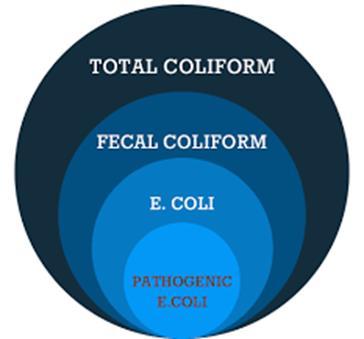
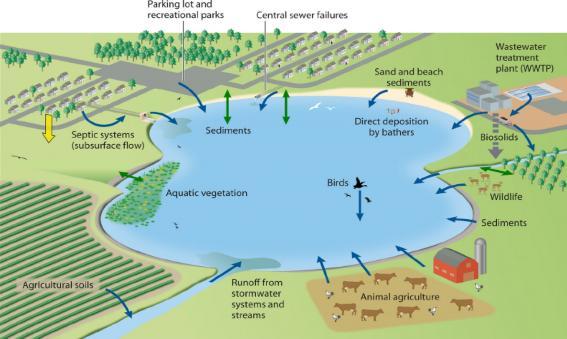
Any open water will have at least some of these bacteria, as there are many different sources of them. Some of these sources can include:
- Residential cross connections (i.e. when a residential sewer line is accidentally connected to a storm drain instead of the sewer line)
-
Water runoff that contains
- Yard waste
- Pet waste, especially dog feces
- Waste from wild animals, such as birds, fish, racoons, opossums, etc.
- Illegal discharges into the stormwater system
- Inflow and infiltration
- Sanitary sewer overflows
Inflow, Infiltration, and Overflows: Definition and Causes
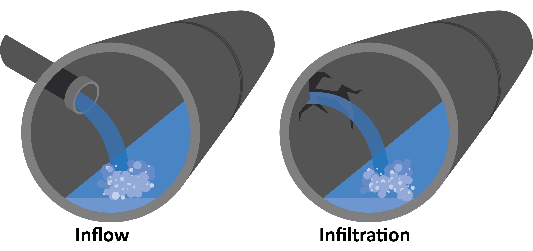
- Inflow happens when there are direct connections between the sewer and drainage systems.
- Infiltration occurs when defects in the pipes or manholes allow water to enter or exit the pipe.
- Overflows occur when sewer cannot flow through the pipe and comes out of a manhole onto a street.
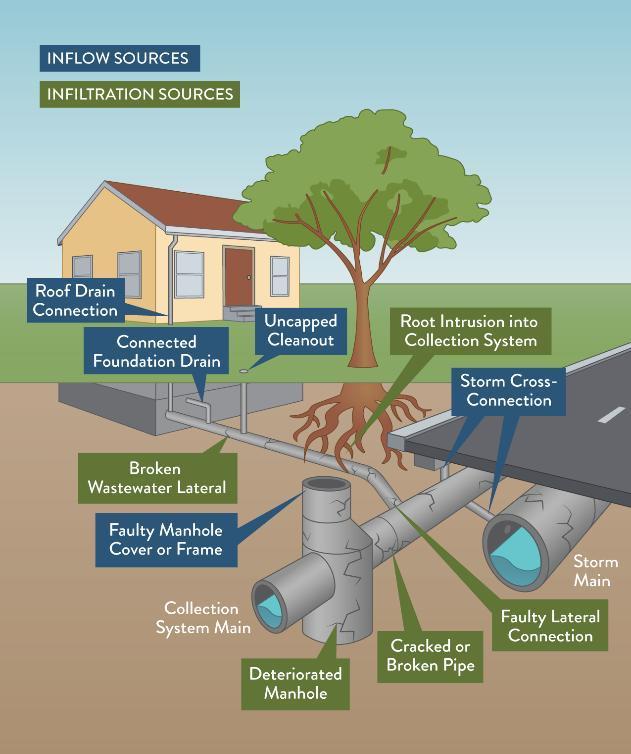
Please call 52-WATER if you observe, or even just suspect, inflow, infiltration, a sewer overflow, or illegal discharges into the stormwater system.
Public Health, Safety, and Environmental Concerns from Elevated Levels of Fecal Bacteria
If there is a sewer discharge nearby, you might notice a smell like sewage or rotten eggs. The rotten egg odor comes from hydrogen sulfide, which is a byproduct of bacteria breaking down organic matter. While high levels can be dangerous, outdoor areas rarely reach these levels. Most people can smell hydrogen sulfide at low levels, which are not harmful. You might also smell these odors near temporary bypass pumps. Bypass pumps are used when a main pump at a sewer lift station is out of service.
Fecal bacteria in water almost never become airborne. The main risk is direct contact with contaminated water. Even workers at wastewater treatment plants don’t need respiratory protection when working outdoors. Since high levels of fecal bacteria can lead to waterborne illnesses, the U.S. Environmental Protection Agency (EPA) and the Louisiana Department of Environmental Quality (DEQ) have set limits for recreational waters to lower the risk of exposure.
| Type of Contact | Fecal Coliform (DEQ*) | Fecal Coliform (EPA**) | Enterococci (DEQ*) | Enterococci (EPA**) |
|---|---|---|---|---|
| Primary Contact (i.e. swimming, water skiing) | 400 cfu/100mL | Not specified | 130 colonies/100mL (cfu or MPN) | 70 MPN/100mL |
| Secondary Contact (i.e. boating or fishing) | 2,000 cfu/100mL | Defers to state limits, but recommends no more the 5x the primary contact limit. | N/A – only used for primary contact water | *recommended limits depend on activity |
*Source is Louisiana Administrative Code (LAC) Title 33, Part IX. Water Quality – Chapter 11.
Surface Water Quality Standards
** Source is EPA's Recreational Water Quality Criteria
If a waterbody has sewage or fecal bacteria contamination, the EPA, Louisiana DEQ, Louisiana Department of Health (DH), and SWBNO recommend these precautions:
- Don’t contact the water directly if bacteria levels go above safe limits for primary contact recreation. Keep pets and animals away from contaminated water.
- Avoid using contaminated water for recreation, such as boating or fishing, if bacteria levels are above limits for secondary contact recreation.
Dwyer Canal Updates
The information in this section is current through September 16, 2026, and was uploaded on September 17, 2026.
Summary of the Situation:
In December 2025, residents near the Dwyer Canal reported discharges of sewer into the Dwyer Canal near Wilson Ave, along with persistent odors of sewage in the general area from Wilson Ave to Wright Blvd.
By January 2026, SWBNO started an investigation, which is still ongoing. So far, the investigation has found that sewage is entering the stormwater system in several places. This is happening due to sewer line defects, which are now being repaired. Another major issue is that the Cerise Pump Station went out of service in December, which caused increased levels of sewer in the underground pipes while a temporary pump was in place. This likely increased the amount of sewer infiltrating into the stormwater system, but has since been fixed.
Investigation and Work Status:
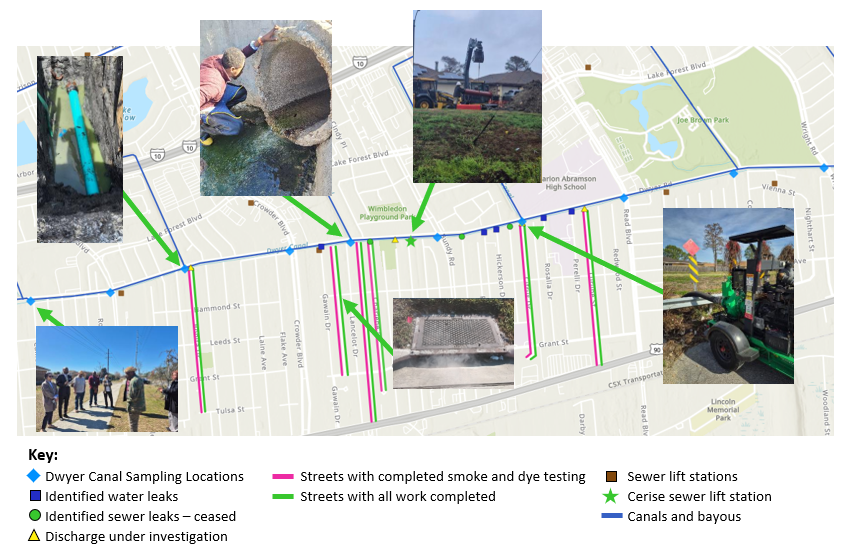
Since starting our investigation, we have found sewer infiltration into stormwater lines on these streets:
- Bonita Dr.
- Galahad Dr.
- Arthur Dr.
- Charlene Dr.
- Citrus Dr.
- Lurline St.
The table below lists the main issues identified on these streets along the Dwyer Canal. It also shows the status of the resolution for each issue and describes fixed problems at the Cerise and Castle Manor sewer pump stations.
| Issue | Resolution and Status |
|---|---|
| Defects in underground sewer lines leading to infiltration into stormwater lines |
|
| Blockages in sewer lines |
|
| Illicit/Illegal Discharges | Example – concrete debris identified on Grant St, likely impacting box canal near Cerise PS. |
| Cerise Pump Station Bypass (mid-December 2025 – early March 2026) |
|
| Castle Manor Pump Station Overflow (December 2025) | Temporary pump failure – corrected same day; flushed area and sewer discharge recovered from canal. |
The following map illustrates the work completed and on-going in this area:
Water Quality Test Results:
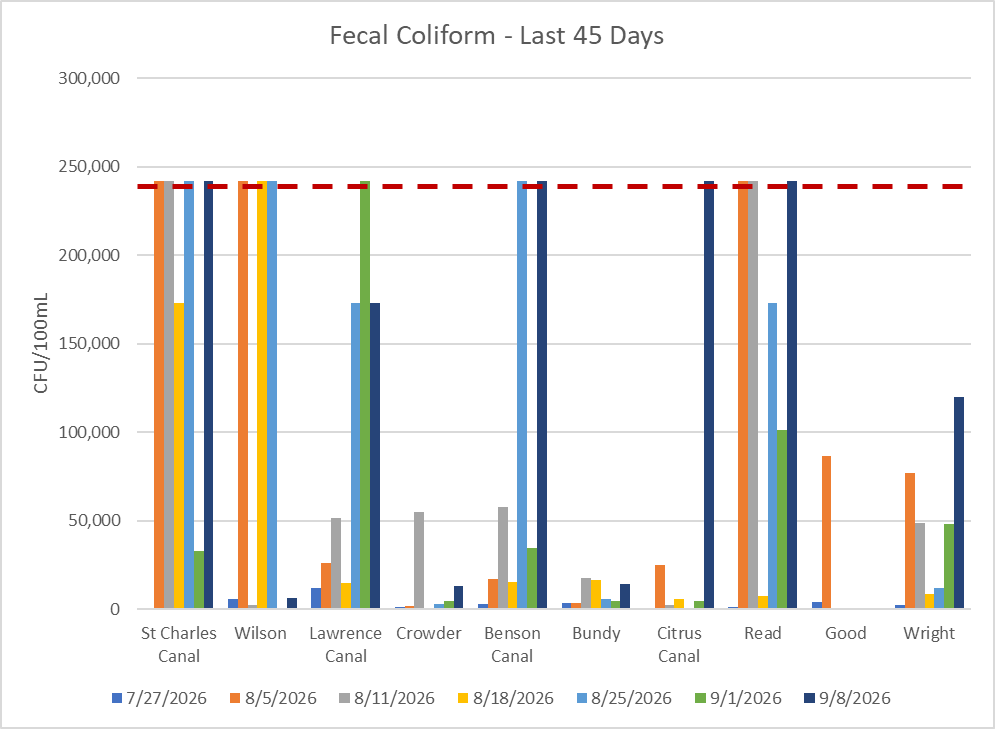
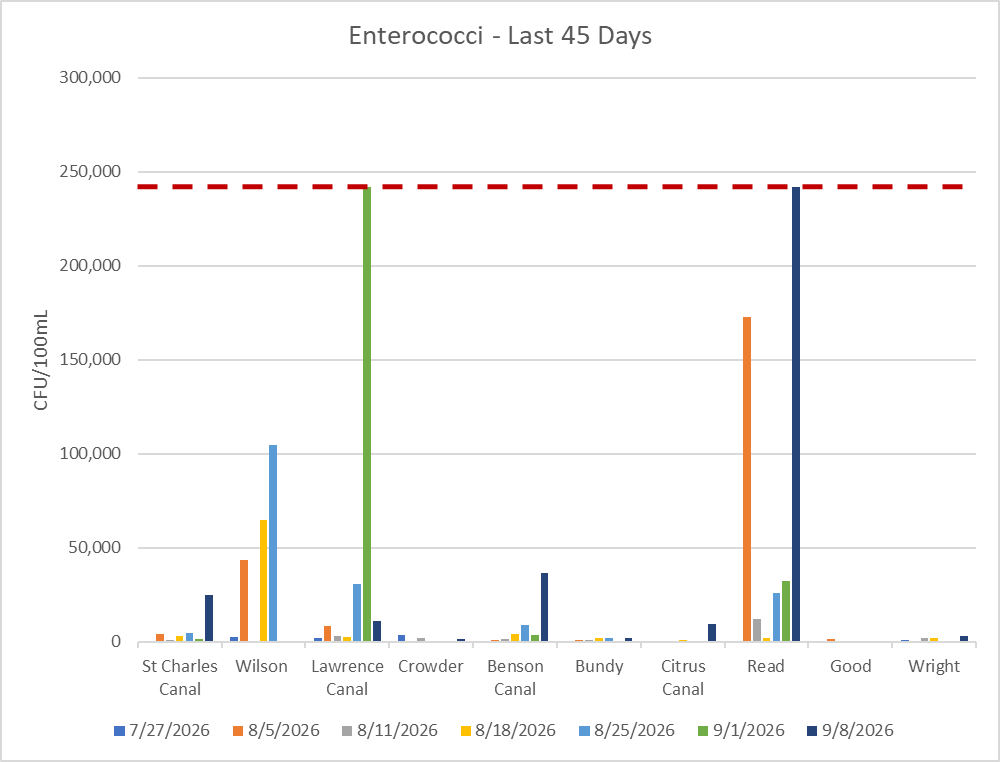
As of February 23, 2026, SWBNO began weekly water quality tests at several sites along the Dwyer Rd Canal. This testing helps to show the current conditions of the sewer lines. After repairs are complete, we will use these tests to confirm that all sewer line defects have been fixed. The sampling sites from west to east along the Dwyer Canal are:
- Intersection with the St. Charles Canal
- Wilson Ave.
- Intersection with the Lawrence Canal
- Crowder Blvd.
- Intersection with the Benson Canal
- Bundy Rd.
- Citrus Dr./intersection with the Citrus Canal
- Read Blvd.
- Good Dr. (added 6/15/2026)
- Wright Rd.
The charts and graphs below show the fecal coliform and Enterococci bacteria levels at each site, and their changes over time since we began weekly testing.
All results are reported in MPN/100mL. MPN stands for "most probable number," indicating the likely number of live bacteria in the sample. The dashed lines on each graph show the maximum bacteria levels that the lab can detect. Both tests can identify a minimum of 100 MPN/100mL, and a maximum of 241,960 MPN/100mL.
Sample Results by Sampling Location:
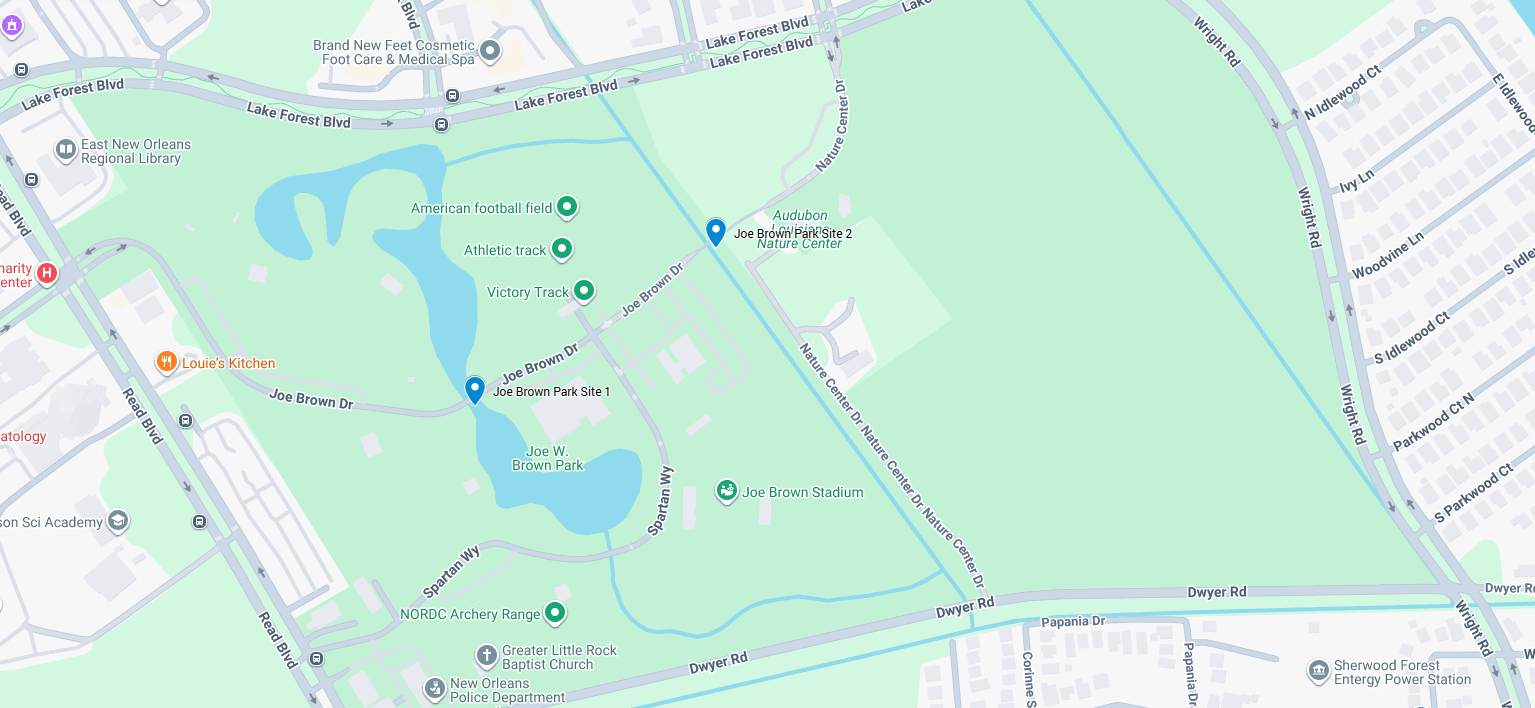
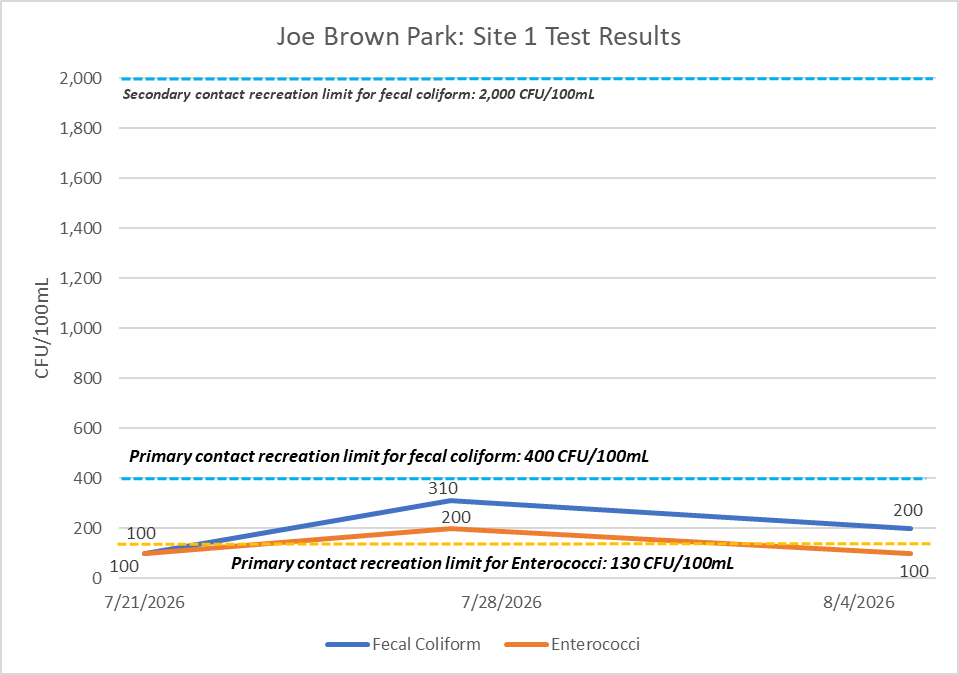
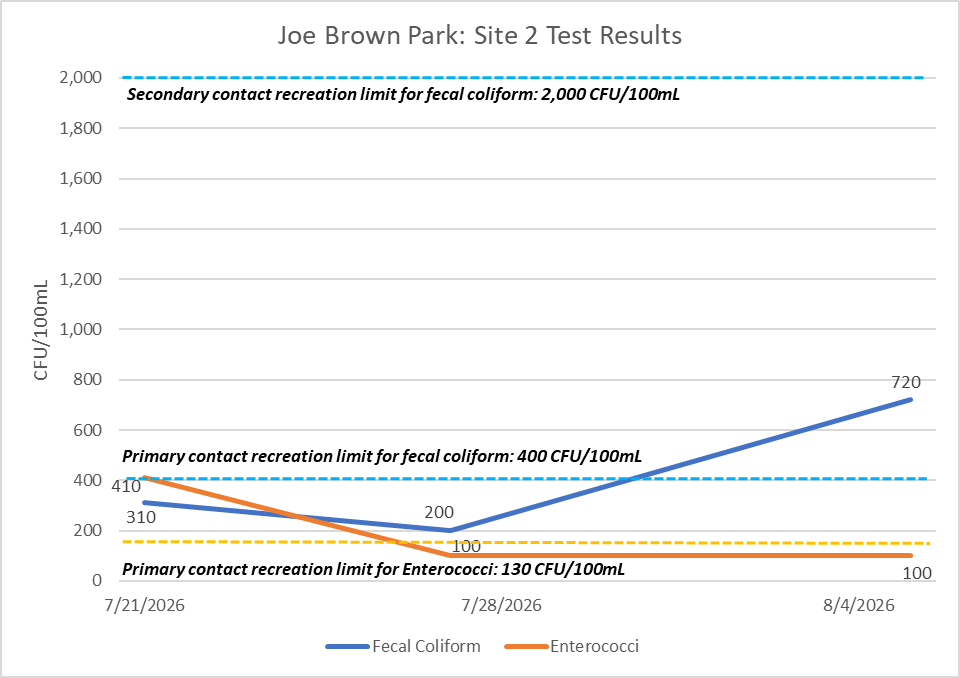
During a recent meeting with the community, several community members expressed concern that the high levels of bacteria seen in parts of Dwyer Canal could be impacting water quality in Joe Brown Park. To address this concern, we began water quality testing at two new sites on July 21, 2026: in the center of the pond in Joe Brown Park, and the canal that runs between the park and the Audubon Nature Center. For all 3 test dates we have done testing, both sites were well under the safe limits of fecal coliform bacteria for both primary recreation activities, such as swimming, as well as for secondary recreation activities, like fishing and boating. Enterococci had one date out of three at each site where the results were over the recommended limit for primary recreation, but were still considered safe for secondary recreation activities. You can see a map of these testing locations and the test results from each site below:
Community Meetings:
SWBNO has held several meetings with the community since this issue was brought to our attention in December 2025. These meetings aim to gather community concerns and suggestions. They also allow SWBNO leadership to update the public on our steps, progress, and timelines for fixing the Dwyer Canal issues. We take this seriously and will keep holding meetings as we work toward a solution.
Industrial Canal Sewer Break Updates
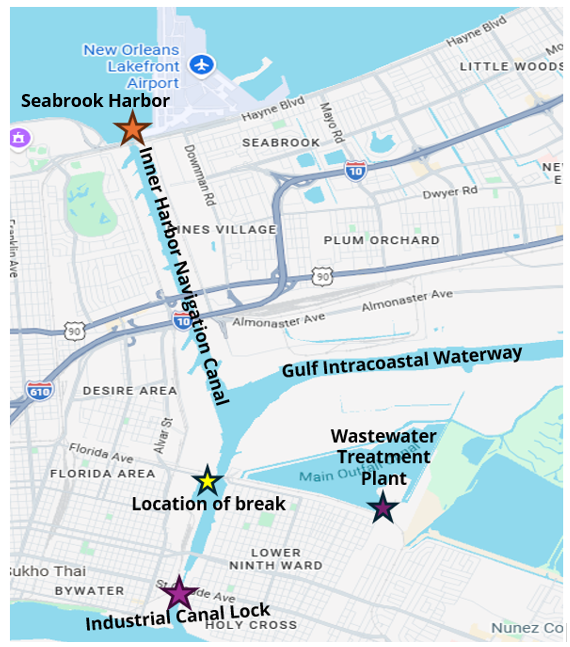
On April 17, 2026, a passing vessel damaged a 54” sewer force main in the Industrial Canal. Contractors arrived on April 18 to assess the damage. However, they struggled to see clearly because sewage was discharging into the water. SWBNO had to order two 54” line stops for the sewer main (one for each side of the break) to fully stop the sewer from flowing into the canal. Discharge into the canal stopped on April 27.
By then, about 50 million gallons of sewage had entered the Industrial Canal. The Industrial Canal Lock helped limit canal water flow into the Mississippi River to reduce contamination of the river.
SWBNO worked with the Department of Health and DEQ to conduct regular water quality tests during and after the discharge. The Pontchartrain Conservancy also does weekly testing at the Seabrook Harbor, where water enters the lake from the Inner Harbor Navigation Canal – you can review their test results here. As you can see from their results, water quality in Lake Pontchartrain was mostly unaffected. As of May 14, 2026 all recreational advisories have been lifted.
There is no impact to regular sewer collection for residents. SWBNO is now working with contractors to clear debris around the pipe break and create a repair plan for the damaged section.
New Orleans East Pilot Project to Reduce Sanitary Sewer Overflows (SSOs)
In 2025, SWBNO’s Environmental Affairs Department applied for and was awarded a $400,000 grant. The goal of this grant is to pilot technology in New Orleans East to reduce the number of SSO events and reduce odors at sewer lift stations.
On April 17, 2026, SWBNO posted a Request for Information (RFI) for this project. The RFI aimed to gather information on various SSO prevention and odor reduction technologies. By May 15, the RFI closed with 15 diverse responses. The project committee is currently reviewing these submissions.
After the project committee reviews the proposals, they will choose one or more technologies that best meets the project goals. SWBNO will then put the project out for bid. Our goal is to have the chosen SSO prevention technologies installed by the end of 2026. We will update this page as new information becomes available.